China's textile industry has been passed down from ancient times and has been passed down for thousands of years. After the reform and opening up, China's textile industry has also entered a period of development. After decades of development, the textile industry and its upstream and downstream development. Also very obvious
Analysis of the status quo of textile manufacturing industry revenue
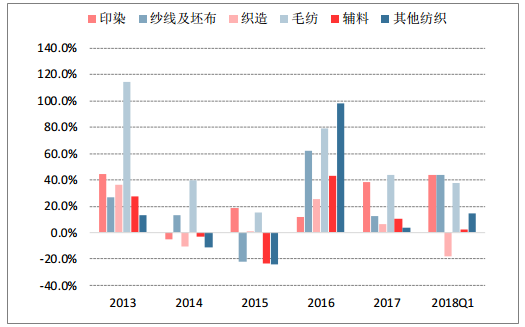
In terms of textile sub-sectors, in 2017 and 2018Q1, revenues of various sub-sectors continued to grow rapidly, the main reason:
①Export data continues to improve from January to April 2018 ②Xinjiang's development enjoys multiple preferential policies such as cotton subsidies and freight subsidies. Enterprises in Xinjiang benefit from subsidy advantages and market competitiveness of products is improved;
③After the completion of the four batches of environmental protection inspections, the printing and dyeing plates have achieved remarkable results in terms of production capacity. Under the background of environmental protection normalization, the leader is “leftover”;
④Under the cost-plus pricing model, cotton prices have remained at a high level since 2017, and yarn price increases have slowed down and have some lag. However, due to the impact of exchange losses, the net profit growth rate of returning homes has basically maintained a positive growth, but the growth range has moved downward.
2013-2018 China's textile manufacturing sub-sectors operating revenue growth year-on-year

2013-2018 China's textile manufacturing sub-sectors return to the mother's net profit year-on-year growth rate